



Fix Cube Lockups Like a Pro
Cube lockups can be very frustrating, especially when they occur mid-solve. The usual culprits for it are poor lubrication, loose/tight tensions, or dust buildup inside the mechanism.
In most cases, applying the right lubricant, like one of Cubelelo’s cube lubricants, instantly resolves these turning issues and helps prevent future lockups.
This step-by-step guide will aid you in troubleshooting the root cause and fixing it for good! But first, let’s understand why a Rubik’s cube might lock up in the first place.
Why Does a Rubik’s Cube Lock Up?
A lockup usually occurs when one layer of the puzzle catches on another instead of going through the turn smoothly. So, instead of flowing algorithm execution, the cube suddenly jams, forcing you to pause and correct the layer alignment.
Every cube experiences occasional lockups (yes, even the premium speedcubes that cost thousands of rupees), but frequent lockups usually indicate that something in your puzzle isn’t set up correctly to your turning style.
Fortunately, almost all lockup-related issues can be diagnosed and fixed in minutes.
Check #1: Cube Lubrication
Lubrication is one of the most important factors that contributes to a speedcube turning well. Over time, the lubricant present in your cube dries up and, without lubrication, the pieces internally create much more friction against each other, which makes turns feel rough and directly increases the chance of lockups occurring.
A quality speedcube lubricant can
a) Reduce Friction
b) Improve corner-cutting. Reduce lockups.
c) Extend the life of your cube.
Most cubes arrive with factory lubrication already present, but it’s crucial to keep them lubricated regularly.
It’s also important not to over-lubricate them, since this can make your puzzles sluggish and slow (especially for higher-viscosity lubricants), so start with just a couple drops and work it in through several solves.
You can check out Cubelelo’s extensive collection of standard and premium lubricants here! Remember, lower-viscosity lubricants make your cube faster, while higher-viscosity lubricants slow it down. Choose one based on your requirements, or get the entire set to be sorted for a few years.
Check #2: Cube Tensioning
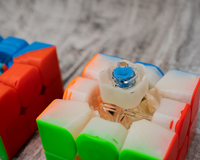
Another equally major source of lockups is cube tension, which is determined for each face by the tightness of the screw on the center piece (which can be accessed by removing the center caps on your cube).
If your cube is too tight, it won’t corner cut well and will get stuck a lot, whereas if your cube is too loose, the pieces will shift excessively, which makes your puzzle unstable and increases lockups.
So, just like lubrication, this is about finding a balance between the two, wherein your cube is stable but still allows for good corner cutting.
In fact, most modern speedcubes include a dual-adjustment or spring compression system that allows for fine-tuning, but usually, making small screw adjustments to the factory settings on your puzzle is enough.

Check #3: Internal Cleanliness
Over time, every speedcube will accumulate some level of dust, lint, hair, and dried gunk of lubricant, which all contribute to increasing the friction of your turning and make the cube feel inconsistent as a result.
While this is unavoidable, having a regular cleaning schedule for your cube will help reduce its impact on cube performance.
A basic cleaning process involves: Carefully removing a single edge piece at first (move a layer by 45 degrees to achieve this step).
Disassembling the entire cube. Wiping down each piece and all its internal surfaces with a microfiber cloth, making sure to remove all old lubricant and dust in the process. Re-lubricating before or right after reassembly. Do this once every 2-3 months, and remember to avoid using any water or household cleaners, as this may damage the plastic of the puzzle.
Check #4: Turning Style
If you have set up the cube to match your relative turning style and still experience lockups, it may indicate that you need to work on your turning and train to improve.
Many cubers can develop innate habits to not align layers completely in clean turns every time, which causes pieces to collide with each other.
If your cube locks up even though you’ve kept it well-maintained, focus on completing each turn fully while keeping the layers aligned. This can be achieved by using more controllable finger tricks and avoiding excessive force, and doing turning drills to achieve a smoother turning style that becomes more accurate over time, thus reducing the frequency of lockups.

Check #5: Inspect for Damaged Pieces
While this is the most uncommon cause for lockups, it’s worth checking the status of all the internal pieces on your puzzle. Through wear and tear, some internal pieces may strain more than others, and (especially on big cubes) this process can cause some pieces to get damaged from inside, leading to cracks and breaks.
In particular, you want to look for: Cracked/bent corner piece stalks Broken magnet capsules or magnets that have fallen off (dried glue) Warped plastic Chips on contact surfaces (common from cube drops) In fact, if you find that a particular layer keeps on catching or locking up while the others seem to perform normally, this might be a telltale sign that one or more of the pieces in that layer may be damaged in some way.
Fortunately, replacement pieces are available for most popular speedcubes, either through our store or via someone in the community that may be able to give you one.

Common Setup Mistakes to Avoid
Many cubers unknowingly make these mistakes:
a) Over/under-lubricating the cube. Tightening the faces of the cube in a random order (ALWAYS follow an order to remember to hit each face).
b) Ignoring dirt buildup Lubricating a cube after a few months without cleaning it out first. c) Using excessive force or turning layers at awkward angles can also lead to problems.
d) Never changing/adjusting factory tensions. While the frequency of maintenance. depends on how often you solve it, aim for lubrication every month.
e) Cleaning should be done every 2-3 months on average.
If you have a competition coming up, make sure to finish your setup early so you’re not surprised by your own puzzle on the day of the competition!
Final Thoughts
A large majority of Rubik’s Cube lockups are entirely preventable. In most cases, the solution is similar, starting with cleaning, then putting in some fresh lubricant, and lastly, making sure your tensions are properly and evenly adjusted.
These small maintenance steps can dramatically improve your turning quality and eliminate most of the frustrating catches/lockups that keep interrupting your solves. If your cube is already well set up, focus on polishing your turning technique with smooth and accurate finger tricks.
A well-maintained speedcube combined with good turning technique should feel more or less effortless when turning, and that’s the exact goal when it comes to solving more consistently overall. So what are you waiting for?
Get started with your cube maintenance journey today!